The Leki Makalu FX Carbon is a high end trekking pole that has a very short packed size of only 40 cm (15.7 inches) while unfolded it has a length of 110 to 130 centimeters (43.3 – 51.2 inches). The question that needs an answer: is it any good in my outdoor life?
- Price: € 195,00
- Weight: 169,9 gram per pole
- Packed size: 40 cm / 15.7”
- Length: 110-130 cm / 44”-50”
The background to this review is different from a lot of other reviews that I do. Once in a while I give clinics about trekking poles to outdoor shop staff and to outdoor enthusiasts in the Netherlands. Because I don’t own that many trekking poles myself I always ask Leki for support; they have a huge amount of trekking poles in a test pool for these kinds of gigs. Next to some more straight forward simple poles the Leki Makalu FX Carbon is always in the package. It is also the pole that I get the most questions about. Pricewise that is; people like the pole and want to buy it. That is why I asked Leki if I could keep one set temporarily for testing on a few trips and do a review about them. Leki did not object, of course…
Pole material
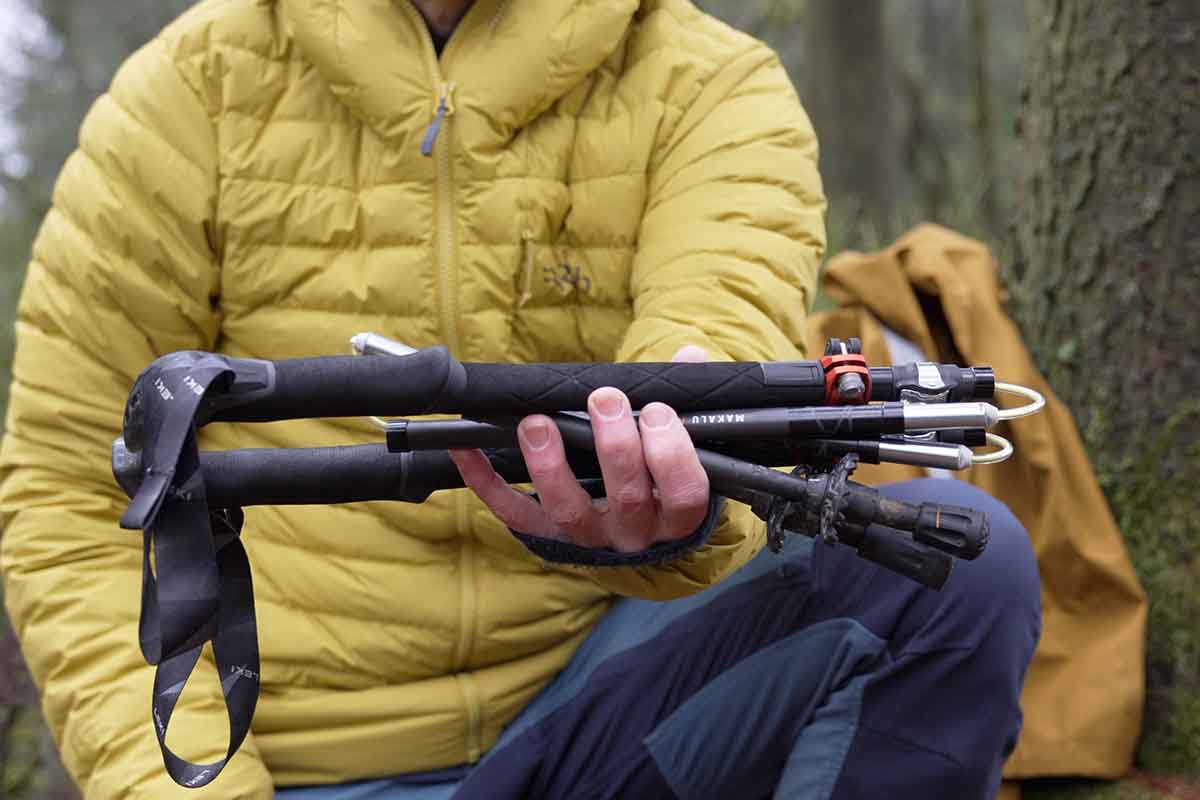
The Leki Makalu FX Carbon is – as the name states – made of carbon fibre. From the outside it is not that obvious – the carbon fiber is very visible on my lightweight tripod from Ulanzi – ; it looks like a dark grey pole that could be made from aluminium or even glass fibre that is painted. The pole misses that ‘traditional’ technical carbon fibre look. The reason is that the Leki’s are made with a very fine carbon weaved mat and then the fibers are not that visible. Next to that the poles are matt finished hence the more anthracite color color. The poles are hollow to reduce weight.


Grip
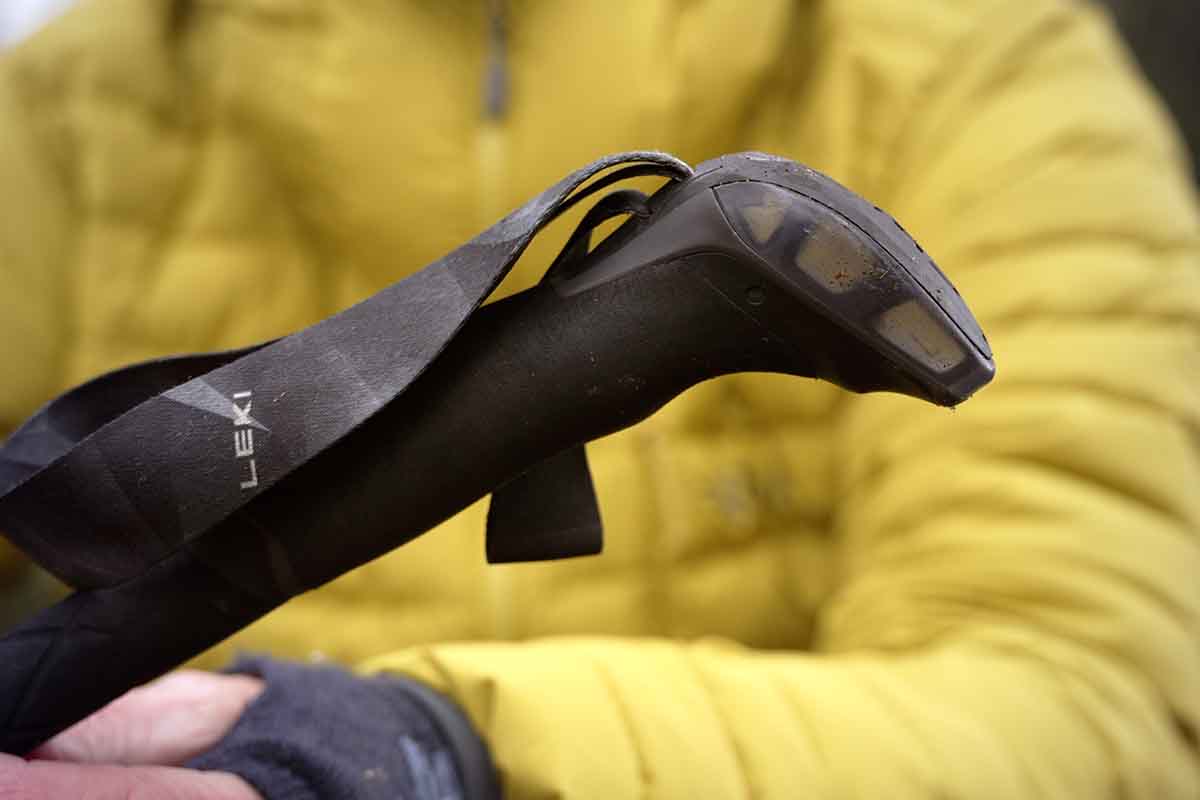
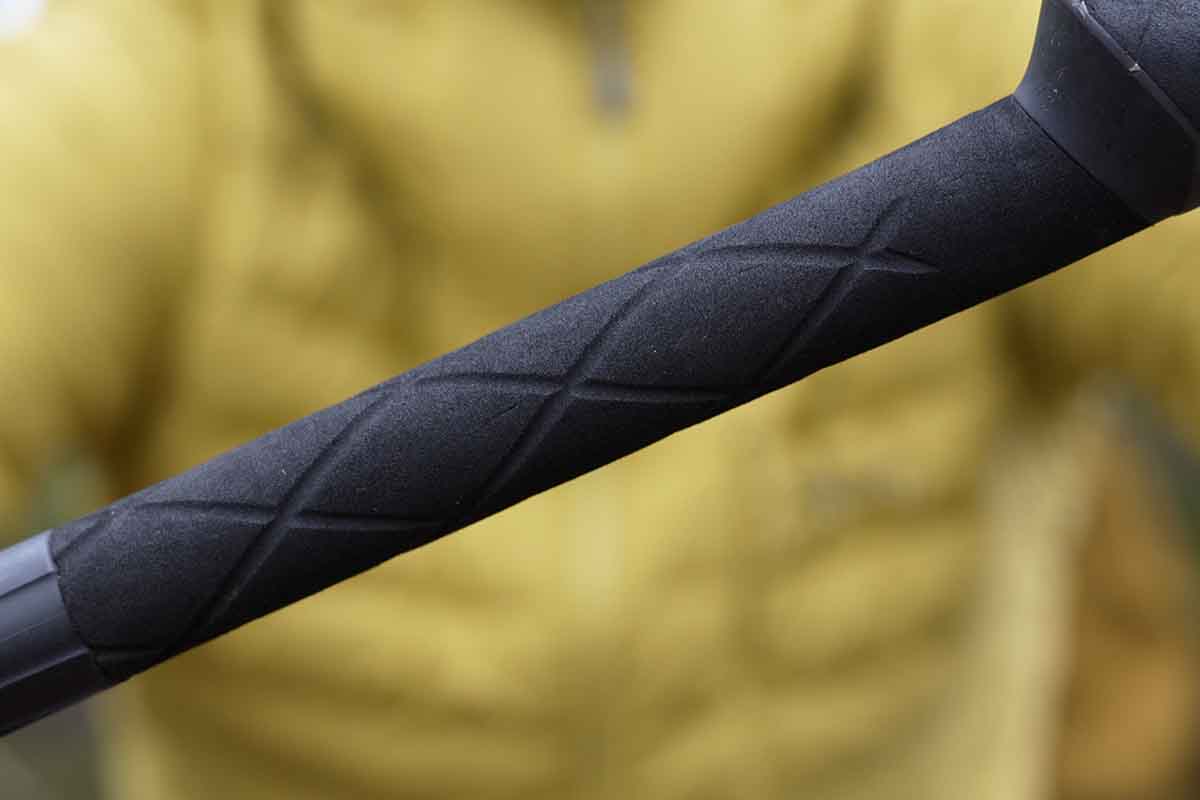
The grip is made from a rubbery foam material. The top part is slightly articulated for a more ergonomic fit. The top of the grip is ‘mushroom’ shaped. That is something that I like a lot since I like using the poles while holding this mushroom top instead of using the hands around the grip. The top of the mushroom has a sturdy and grippy rubber material that prevents slipping. The top part of the grip has a length of 11 centimeters (4.3 inches) to wrap your hand around. The diameter is about 95 mm. The lower part has a length 15 cm (6 inches).

Strap
Every trekking pole has a strap near the grip. The strap can be loosened by pulling it upwards. Then put your hand in the loop from underneath, adjust the strap by pulling the pulling tab on the strap and when adjusted pull the strap downwards and it locks. The material is very soft and the strap feels comfortable to the skin. I never use the strap, more on that later.
Pole sections
The Leki Makalu FX Carbon consists of three obvious visible pole sections but the less obvious are two other telescopic sections that are ‘hidden’ inside the top pole. The sections are held together with a very strong Dyneema wire inside. Because the packed size is 40 cm (15.7 inches), it is logical that the largest pole section (with the two telescopic inner poles in it) is this length. The other two sections are 20 centimeters (7.8 inches) and 30 centimeters (11.8 inches).
When packed the Leki looks a bit like a Z… wasn’t this the name of another pole manufacturer for this type of pole construction? If you know that manufacturer: post it in the comments!

To get the ‘three’ sections together, all I have to do is align the sections and pull the second section out of the grip section until I hear a metal click. That click indicates that the complete pole is fixed. All that remains is to adjust the pole to my desired length. This is done by releasing an external clamping system on the top section (Leki Speed Lock 2 Plus). It is user friendly, does not need too much force to use and can be adjusted if the pole wears down after a while. In my case I need to adjust the pole to a length of 115 centimeters (45.3 inches). And now it’s time to start hiking.


Tip, basket, rubber cap and pouch
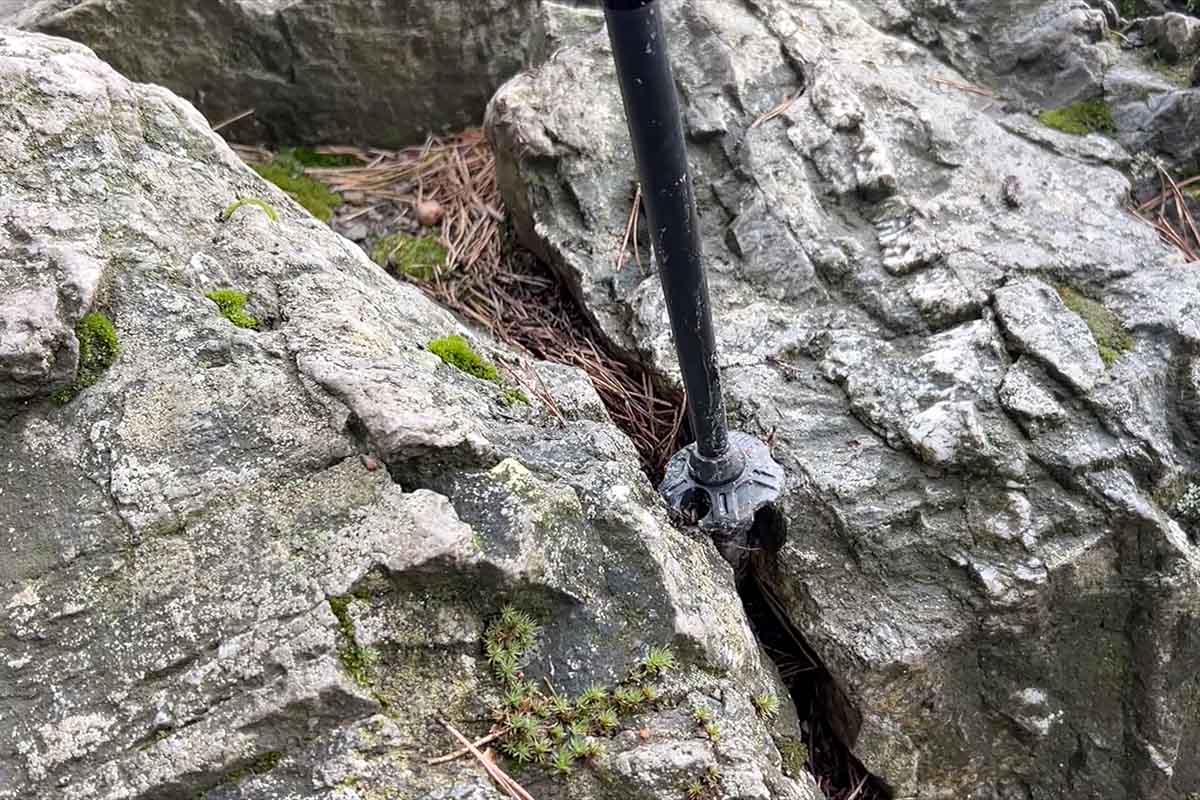
Every trekking pole shares one essential feature: the tip. This small part touches the ground countless times throughout its lifespan. On soft trails in the Netherlands, it hardly shows any wear. But in the rugged, rocky terrain of the Alps, it faces a real challenge. That’s why tips are made from carbide. This material is nearly as hard as diamond and highly resistant to wear. The tip is mounted on a flexible base. If it gets caught in a crack or wedged between rocks, the tip bends instead of breaking the pole. The tip is replaceable.
The basket that comes with the Leki Makalu FX Carbon is a small one; it has a diameter of 40 mm (1,57 inch). It can be replaced or exchanged for a bigger one.

Most poles also come with a rubber cap that slides over the tip. This not only protects the carbide point but also provides extra cushioning and grip when walking on hard surfaces like asphalt. ‘My’ poles came without so I used others. The same for the pouch; it did not come with these poles but when you buy new ones it will.

NOTE: The Leki Makalu FX Carbon is also available with a vibration-absorbing construction made of elastomer material. If you want this look for the Makalu FX Carbon AS
Leki Makalu FX Carbon in practise
I have been testing the Leki Makalu FX Carbon on many trips in the Alps, the Belgium Ardennes and in Sweden and I am pleasantly surprised about their ruggedness. Carbon poles have never been my favorite because in the past a small hit on a sharp rock could damage and break them. These… it is probably possible but ‘mines’ are still 100% fine.
Big pro’s are the packed size and the weight: small and pretty light. I do have lighter very compact poles, but they are not made for trekking but for running trails. Putting them together is straight forward and never fails. It also does not take a lot of force. Note: I did not test them in freezing conditions…. Minimum temperatures just around 2 degrees Celsius (35,6 Fahrenheit).
The grip feels soft in the hand and is suitable for average hands. The mushroom shaped rubber top offers good support and grip. The extension allows me to grip the pole low, which is handy for steep passages or traversing a steep section.
Many ways to use the grip
I always like to use the mushroom top when I am hiking on flat or even terrain. Like an old man with a walking cane I put the palm of my hand on top. This is just how I like using trekking poles. I’ll do a video on this later. On more technical parts I use the grip in more than one way. I found that the ‘hook’ on the Leki’s grip is a good support for the whole hand. When grabbing the lower party this ‘hook’ is vernice to rest my thumb and index finger on. When turning the poles around – the mushroom point backwards – this ‘hook’ becomes a super support between index- and middle finger. Do I like the grip? Hell yeah!

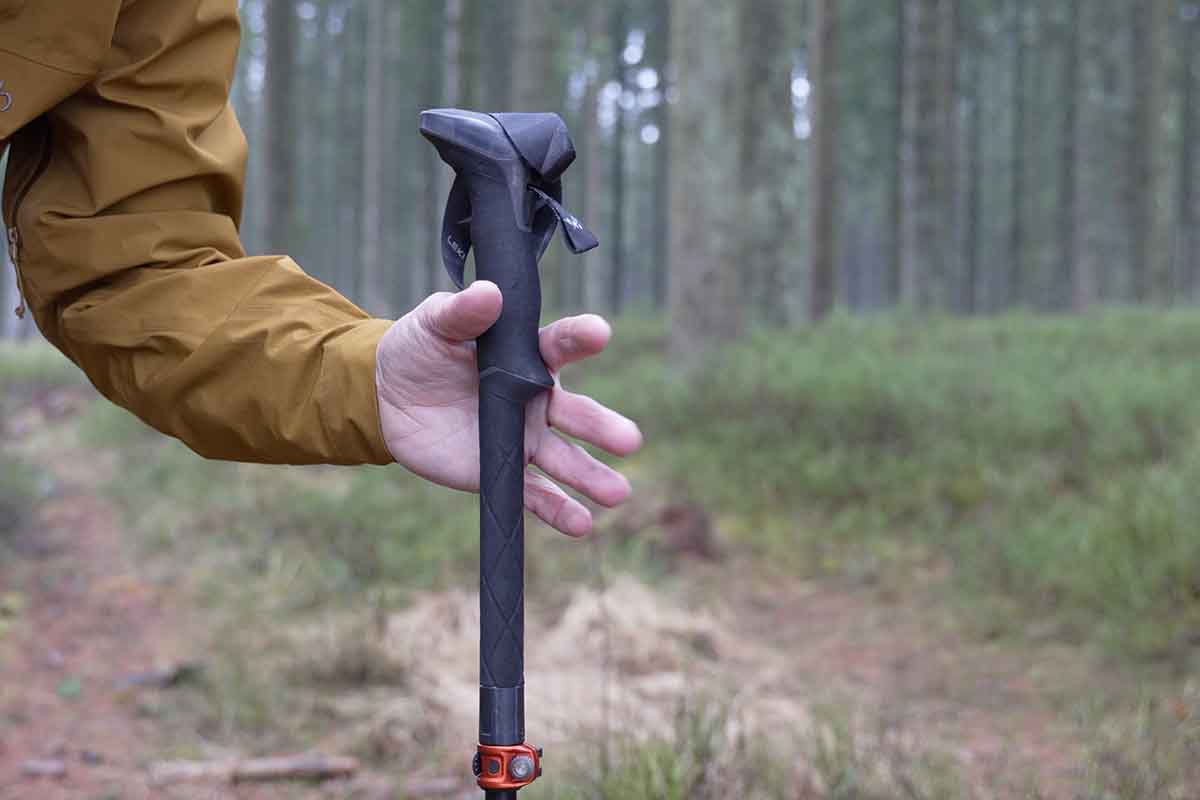
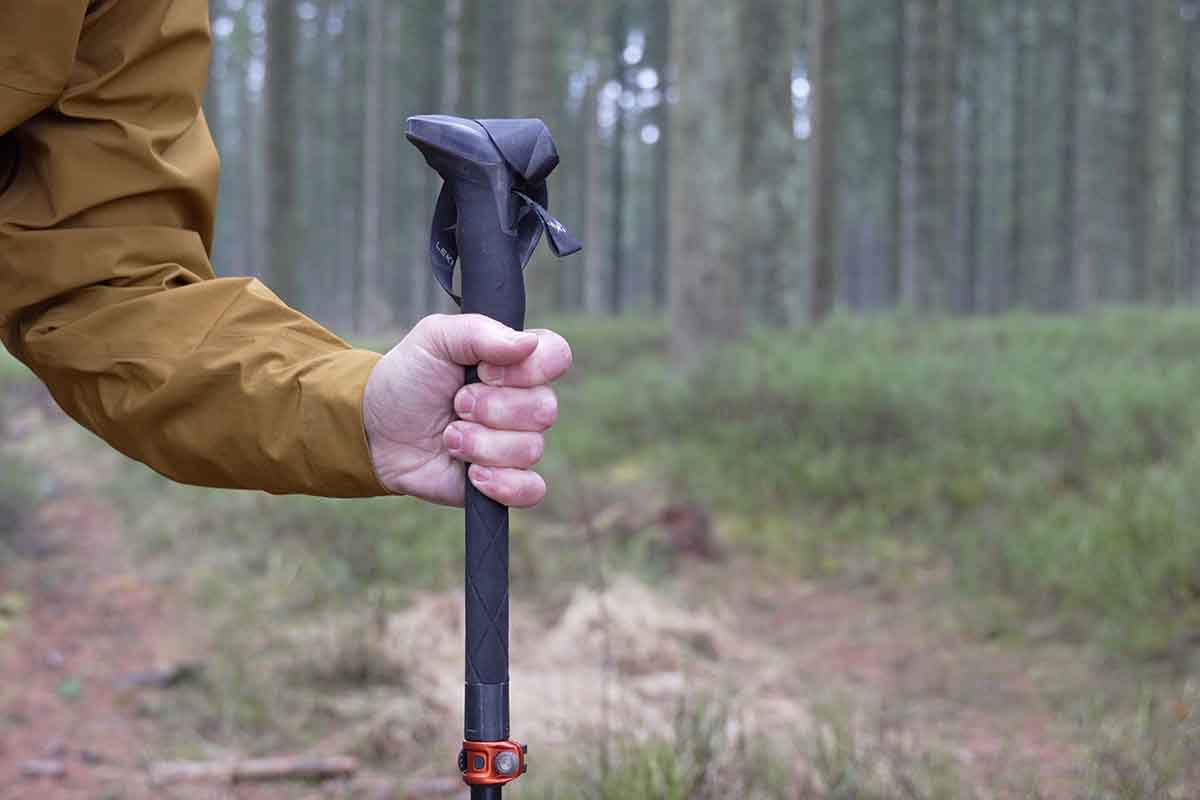
Like I mentioned: I never use the strap. The reason is that I don’t like the poles ‘fixed’ to my hands or wrist. In case of a misstep the pole stays connected and the leverage of a pole is huge. I have seen – and I have also – people trip over the poles and not be able to let go of them. But it is very personal so be free to do whatever you like.
Winter hiking
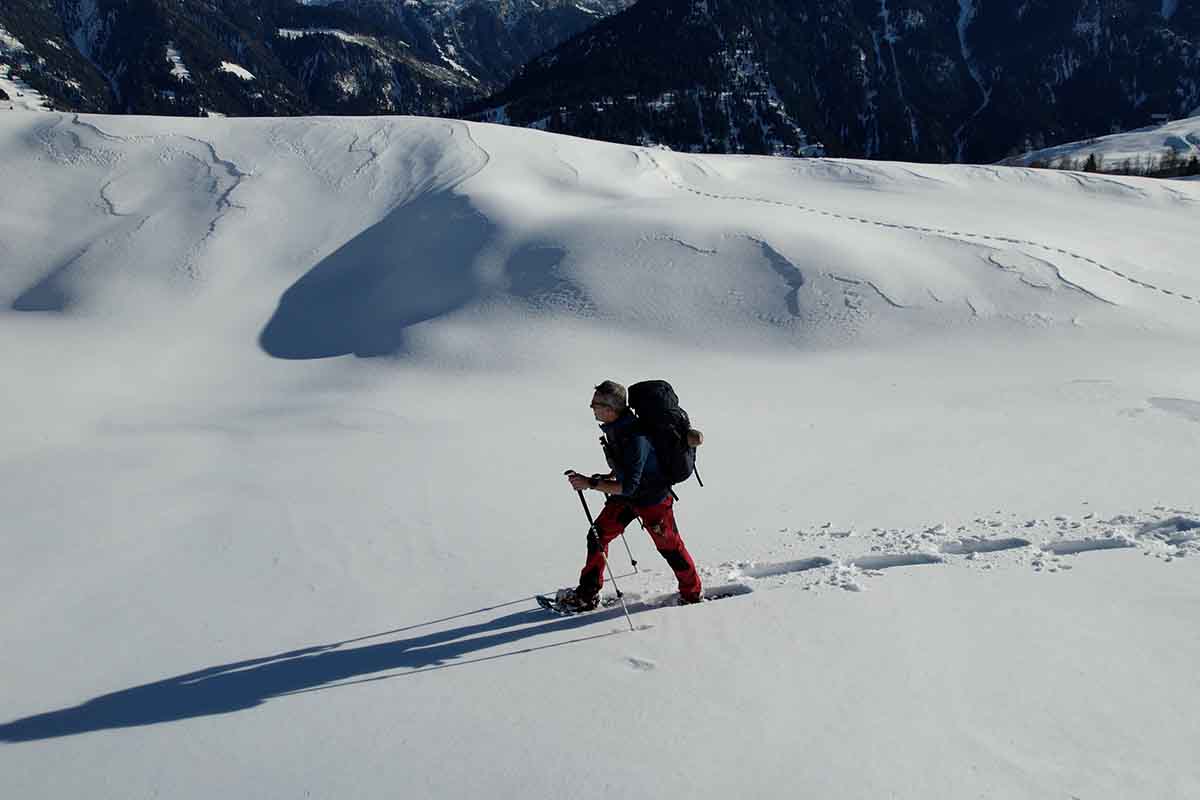
The tip is strong and flexible. This has proven helpful if it gets stuck in a crack and prevents the point from breaking. The small basket is fine as long for most circumstances as you don’t have to go into the snow. For winter hiking, it’s best to swap this for a wider snow basket, which keeps the pole from disappearing into deep snow.
Packed size part II
A small packed size is convenient most of the time but… most backpacks – like the Fjällräven Singi 48 that I reviewed have a system on the back to carry trekking poles. With these poles I could not make it work. The poles are too short to fit properly (or the packs are not made for them). Instead I put the folded poles in the flexible part of the backpack where you would put a rain jacket or so. Result… I lost one pole in Sweden’s Rogen National Park. I know exactly where because I have it on camera. The point is…. I discovered it way later when the backpacks already drove a couple of hundreds kilometers South. Leki sent me a second pair to finish this review and they go back after this review is finished.



I know… some backpacks have carrying systems on the shoulders straps. Fine for my trail running foldable poles but not for the Leki’s. For that they are a bit too bulky.
Verdict
The Leki Makalu FX Carbon is a premium trekking pole that impresses with its compact packed size, low weight, and robust build. Despite being carbon, it has proven to be tough even if I use them a bit carelessly on rocky alpine terrain. The grip is a highlight, offering multiple comfortable ways to hold the pole, including the mushroom-shaped top that provides great support. Setup is quick and intuitive, and the Speed Lock 2 Plus system is reliable.
However, the short packed size has its downside: many backpacks don’t accommodate poles this compact, which can make carrying on the back tricky. While the poles performed well in mild cold, they haven’t been tested in deep winter conditions. For hikers looking for a light, strong, and versatile trekking pole with an excellent grip, the Makalu FX Carbon is a solid choice; just keep an eye on how you carry them when folded. The price is on the higher end of the scale and therefore I rate them 8.8 out of 10 total.
Information:
Link to the manufacturer: leki.com
Think about buying?
Get the Leki Makalu FX Carbon here:
- US https://amzn.to/4rzVSqF
- UK & GER https://amzn.to/4tgEJns
- NL: https://amzn.to/45Pwq8g
Disclosures: All opinions are my own. I don’t have any sponsored videos or sponsor agreements. Some links in the description are affiliate links. By using the affiliate links I earn a small fee of your purchase, it does not cost you anything extra to use them. As an Amazon Associate I earn a small commission from qualifying purchases. They help me to be able to create more free videos for you. Thank you for the support!