The Nitecore UT27 is a lightweight headlamp designed for trail runners, hikers and outdoor users. I tested it in winter conditions in both the Netherlands and Sweden, where long nights, cold temperatures and unpredictable weather make a reliable headlamp essential. After weeks of use around the house, evening hikes and while trail running, here is my review.
- Output: up to 800 lumens
- Light Sources: cool white (6,500K), neutral white light (4,500K), warm yellow (3,000K), red.
- Weight: 75.2 g (claimed 74 g) with battery and headband
- Packed size: 56.0 mm x 46.6 mm x 32.0 mm ( 2.20″ x 1.83″ x 1.26″)
- Weight: 75.2 g / 2.65 oz (Claimed 74g / 2.61 oz)
- Power: rechargeable Li-ion battery pack or 3 × AAA
- Weather Resistance: IP66
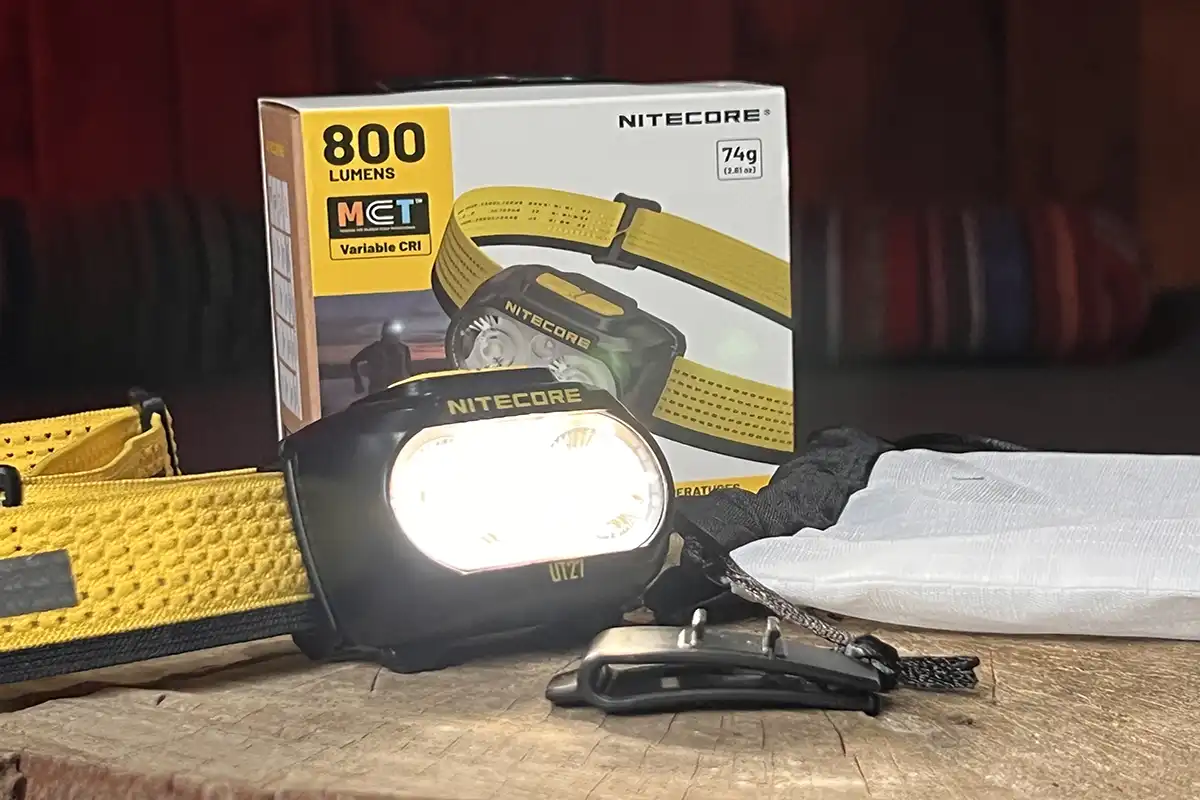
- Extra’s: clip, softbox-style carrying pouch (usable as a diffused lantern)
- Price: € 66 / $ 70 / £ 65.95
When looking for a reliable headlamp that balances performance, weight, and versatility, the UT27 stands out immediately. With dual LEDs, multiple color temperatures, and both rechargeable and AAA battery options, it aims to be the “do-everything” lamp for outdoor users. During my winter testing – wet, windy nights in the Netherlands and cold, snowy conditions in central Sweden – the UT27 proved itself in many areas, but it also has one particular small flaw worth noting.
Key Features at a Glance
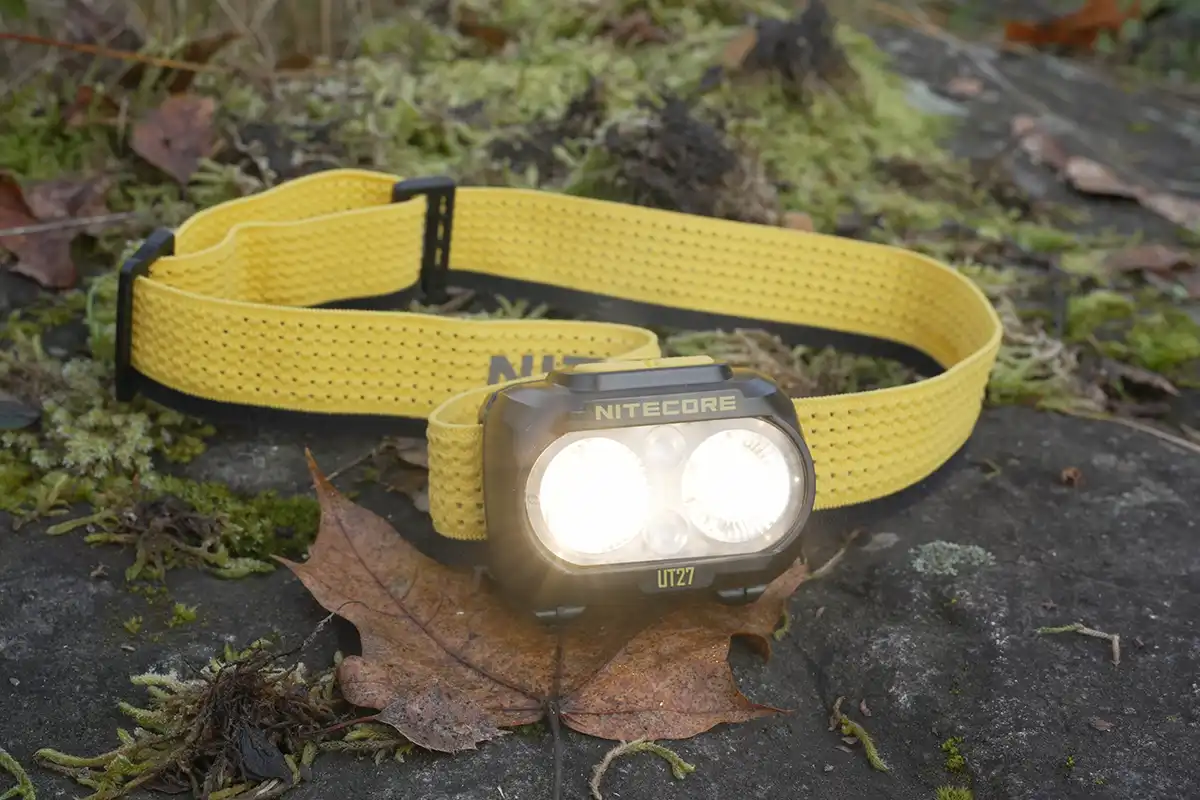
The UT27 offers up to 800 lumens and uses three Cree LEDs that provide cool white (6,500K), neutral white (4,500K), warm yellow (3,000K) light and a red light. Every one of the non-red lights can be used in Low (100 Lumens), Mid (280 Lumens) and High (500 Lumens). Extra is the 800 Lumens Turbo mode. The headlamp accepts both a rechargeable battery pack and standard AAA batteries, which makes it flexible for travel and multi-day trips. With a total claimed weight of 74 grams, it is very easy to carry and barely noticeable when worn. It has an IP66 rating for weather resistance and includes a clip and softbox-style pouch.
Packed size and weight
The Nitecore UT27 comes in a nice recyclable paper and cardboard box. After unpacking I put the headlamp with the li-ion battery on my calibrated scale at home and measured a weight of 75.2 grams. Nitecore claims a weight of 74 grams. I measured the USB cable that comes with the UT27 at 6.3 grams, the softbox that is also the storage pouch at 11.2 grams and the clip at 5.1 grams. The packed size of the headlamp in its pouch has the size between a golf- and tennis ball.
Charging the Nitecore UT27
Charging the Nitecore UT27 is easy: just flipping open the backside and the battery compartment with the HLB1500 Li-ion battery and the USB-C port is directly in front of you. Plug in the cable and you’re done. One remark though; flipping open the back is easy enough at normal temperatures at camp or at home, but on colder days the opening of the battery compartment with cold fingers or gloves can be a little fiddly. Super is the fluorescent battery compartment; it makes placing batteries at night easier.
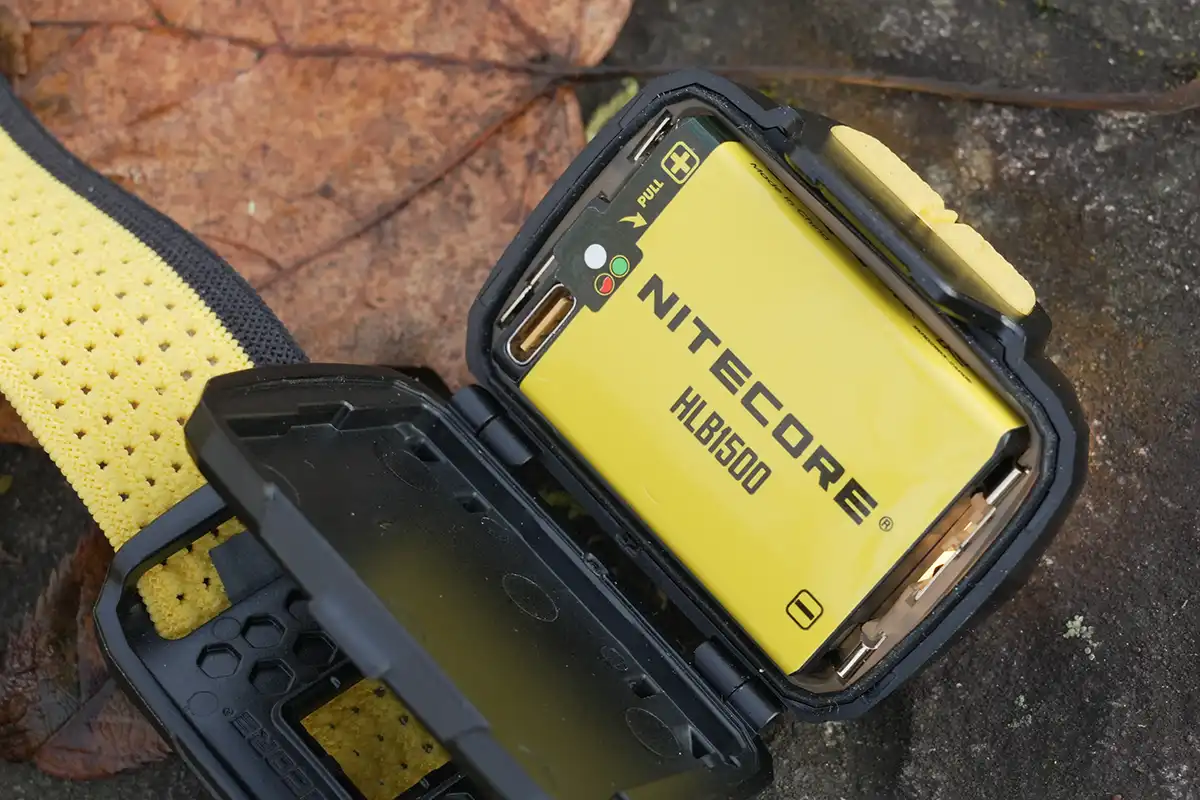

Once connected, charging is straightforward and the battery indicator gives an idea of its status; the light is too small to see very clearly. It is also reassuring that the lamp can run on AAA batteries if the main pack is empty and you cannot recharge on the spot.
Note: The performance with AAA-batteries is not the same as with the Li-ion battery but less I noticed. I did not make any notes but it is about 30% less and the Nitecore website also confirms this.
Light mode operation
The UT27 uses two buttons to control its different light options. The W Button operates the neutral white and cool white modes, while the Y Button controls the warm white mode. Each button provides access to its own set of brightness levels and switching functions.

Primary Light
When the light is off, holding the W Button turns on the neutral white low mode or the cool white low mode, depending on the last color temperature selected. Holding the Y Button turns on the warm light in its low mode. To turn the light off from any of these modes, holding either button will switch it off.
W Button Color Temperature Setting
The W Button allows the user to switch between neutral white and cool white. The lamp comes set to neutral white from the factory. To change the color temperature, press the W Button briefly and then hold it. The lamp will turn on and switch between neutral white and cool white. The Nitecore UT27 remembers the last used color temperature and will return to it the next time it is activated.
Color Temperature Switching
When neutral white or cool white is active, pressing the Y Button once switches the lamp to warm white. If warm white is active, pressing the W Button once switches back to neutral white or cool white. This makes it easy to change light temperature depending on the environment or task.
Brightness Level Adjustment
When neutral white or cool white is active, pressing the W Button cycles through the brightness levels being Low (100 Lumens), Mid (280 Lumens) and High (500 Lumens). Extra is the 800 LumensTurbo mode. When warm light is active, pressing the Y Button cycles through its low, mid and high levels. Each color temperature has its own set of brightness steps that the user can adjust quickly.

Turbo Mode
Turbo mode can be activated from any color temperature. A quick double press of either button after you have switched the light on, will engage Turbo mode providing 800 Lumens maximum brightness. Pressing either button once will return the lamp to the previous mode.
Auxiliary Red Light
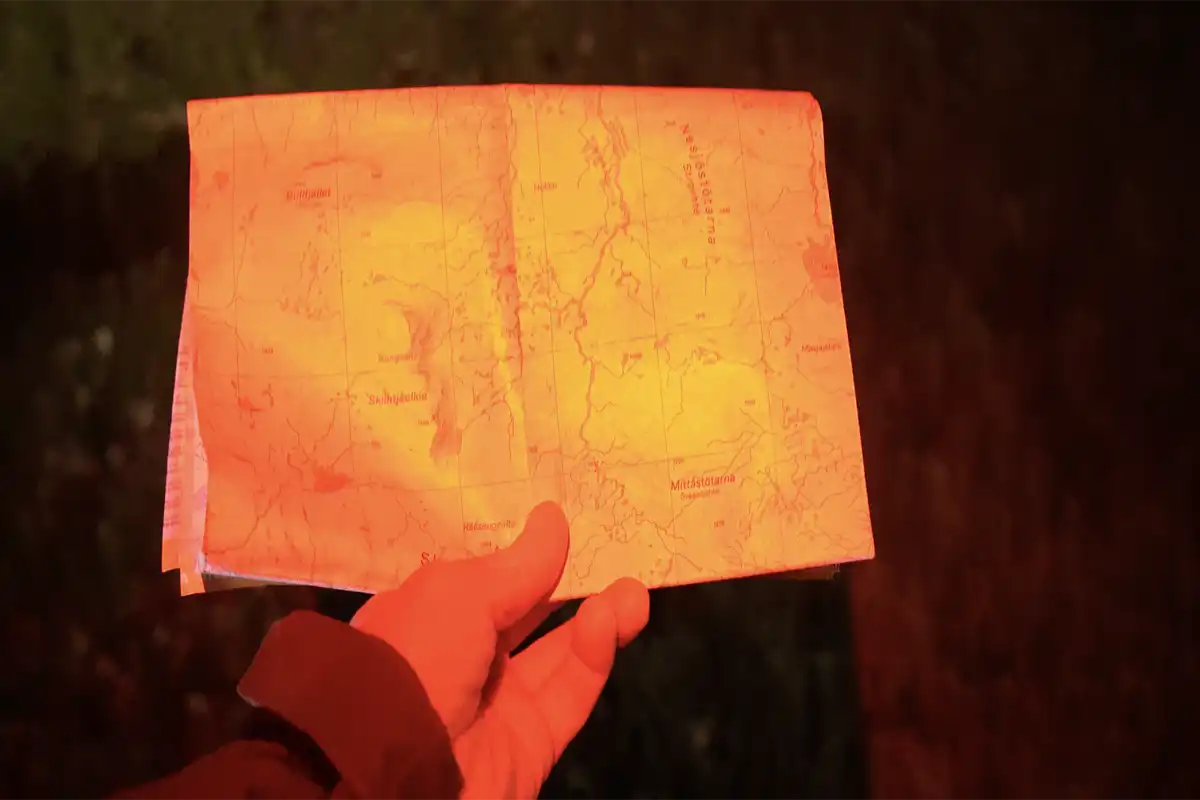
When the lamp is off, double pressing either button turns on the red light. Pressing and holding either button will turn it off again. While the red light is on, pressing either button briefly will switch between constant red light and slow flashing red light.
Downside – What Needs Improvement
Activating the red light requires two very rapid clicks. This double click must be so fast that in quite some cases it does not register. With gloves on, the chance of success drops dramatically. The red light itself works fine once active, but the activation method really needs improvement. In cold winter conditions this becomes frustrating.
Lockout and Unlock
A feature that has proven to be handy when storing the headlamp in a backpack is the lockout mode: accidental activation is not possible. With the light off, pressing and holding both buttons until the lamp flashes three times will engage the lockout. In this mode, the buttons do not respond. Pressing and holding both buttons will unlock the lamp and return it to normal use.
Lumens versus…
So…in Turbo mode Nitecore claims 800 lumen (equivalent of 7124 Candela). About Lumens there is a lot to tell. Lumens is a method of measuring how much light is emitted by the light source. The good thing about Nitecore is that they are absolutely clear on how they measure it: they test conform to the ANSI/PLATO-FL1 Standard. This standard dates back to 2019 and is developed to help us – users – compare for example the Nitecore to other headlamps that have been tested with the same standard. Now… Lumen is just a way of expressing how much light – the light intensity – the lamp produces. And that is the whole point with Lumens, it is not that important. Important is the usability in real life. Now let’s talk about Lux.
…Lux
Lux is – like Lumen – a way of expressing an amount of light but with Lux we talk about the amount of light that reaches a certain spot. So this is actually the useful amount of light for your eyes and for visibility. In the past I did quite a lot of testing on headlamps for the magazine I used to work for. We tested headlamps by measuring the Lumens and the amount of Lux that reaches a certain spot in the R&D laboratory of Philips car lighting. In this laboratory we not only measured the amount of Lumen and Lux but also the lighting pattern. After we did this several times, we made our own lab in the basement of the office. You might understand that since I left the magazine I don’t have this possibility anymore so now I do almost the same, but outdoors.
Nitecore UT27 Field lab
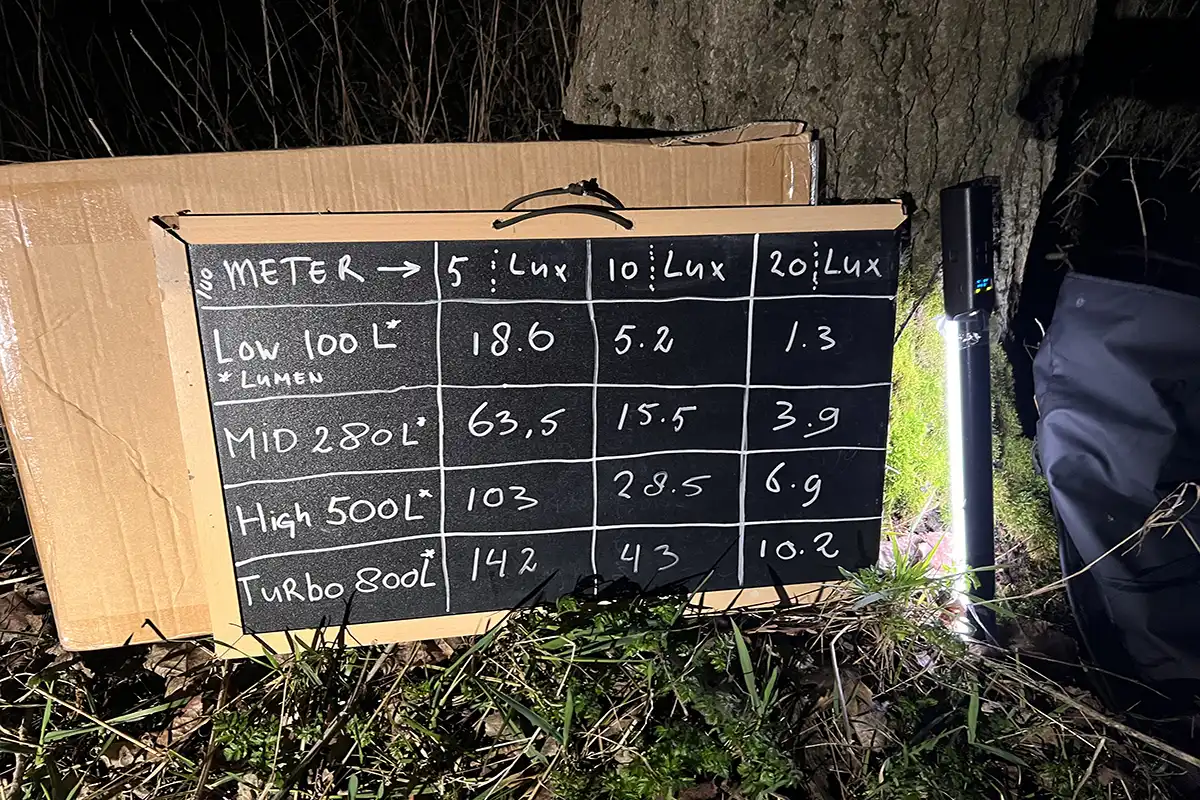
For every lamp that I review I measure the amount of light in the different lighting modes that reaches a simple Lux meter at 5 meters, 10 meters and 20 meters. Five meters is the point that I believe is a good distance while running or just looking around your camp. The other two are more important when speeds get higher or when you need the lamp also for exploring the area around you. Although this method is not 100% correct scientifically, I use it as a way to compare in a simple, very cost efficient and reparative way headlamps and torches. I only measure the centre of the beam. For the Nitecore UT27 in the different lighting modes I measured together with my dearest – this is something I can’t do alone – on a very dark forest road the following values*:
- Low: Max: 18.6 Lux at 5 meter, 5.2 Lux at 10 meter and 1.3 Lux at 20 meter.
- Mid: 63,5 Lux at 5 meter, 15.5 Lux at 10 meter and 3.9 Lux at 20 meter.
- High: 103 Lux at 5 meter, 28.5 Lux at 10 meter and 6.9 Lux at 20 meter.
- Turbo: 142 Lux at 5 meter, 43 Lux at 10 meter and 10.2 Lux at 20 meter.
*Measured with full rechargeable batteries
Maximum throw
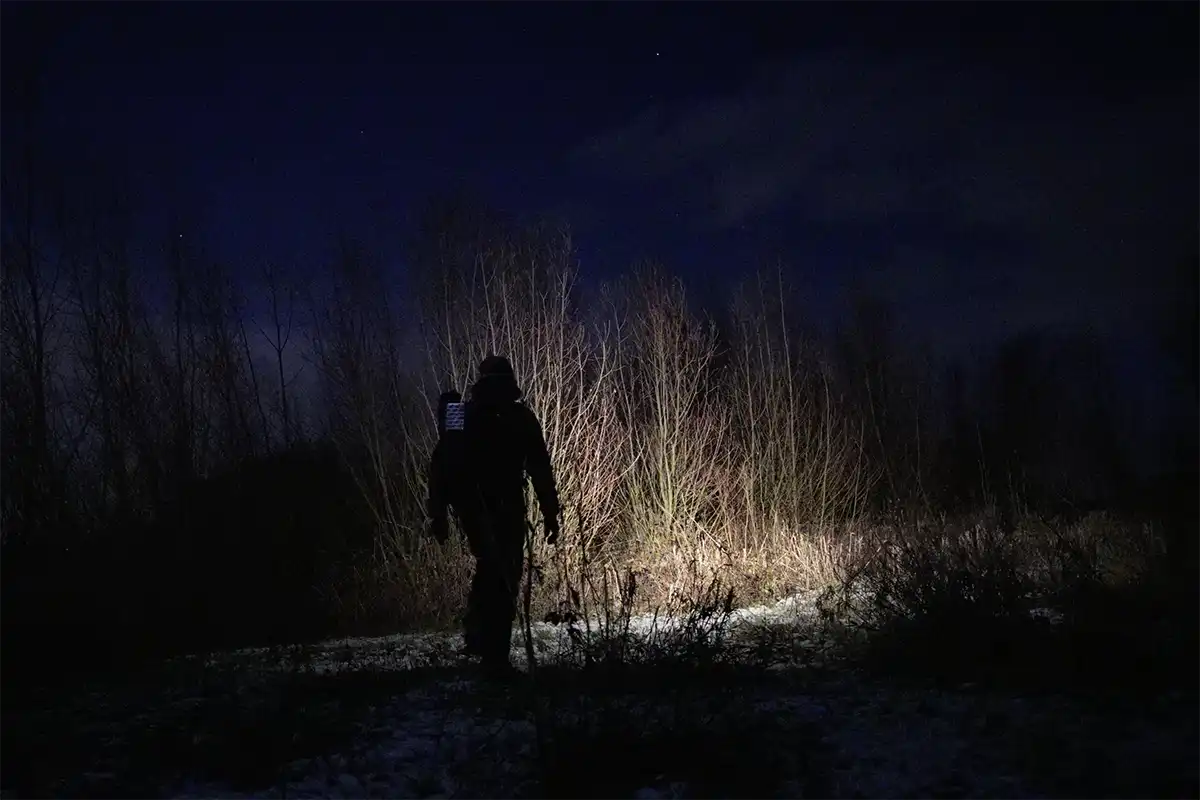
Together with my dearest I also measured the maximum throw of the Nitecore UT27. She had the headlamp and I walked away from here with a reflective beanie on my head. The moment the beanie was not visible anymore is for me the practical throw of the Nitecore. We measured about 100 meters and that is less than the 168 meter Nitecore claims. The number from Nitecore is probably a calculated value conforming to the ANSI/PLATO-FL1 standard and using the 7124 Candela output in Turbo mode. That gives a throw of 168.8 meters. This number represents the distance at which the beam reaches 0.25 lux, which is roughly equivalent to moonlight and we are supposed to see an object … .In theory that might be true but it is not very realistic, but 100 meters is absolutely fine for a headlamp.
For so far the numbers, what do they mean in relation to other headlamps I have tested? Well…. lighting develops and the Nitcore UT27 is by far the brightest headlamp I have tested so far. But how practical is this on the trail or around the campsite?
Pro’s – What Stands Out in Real Use
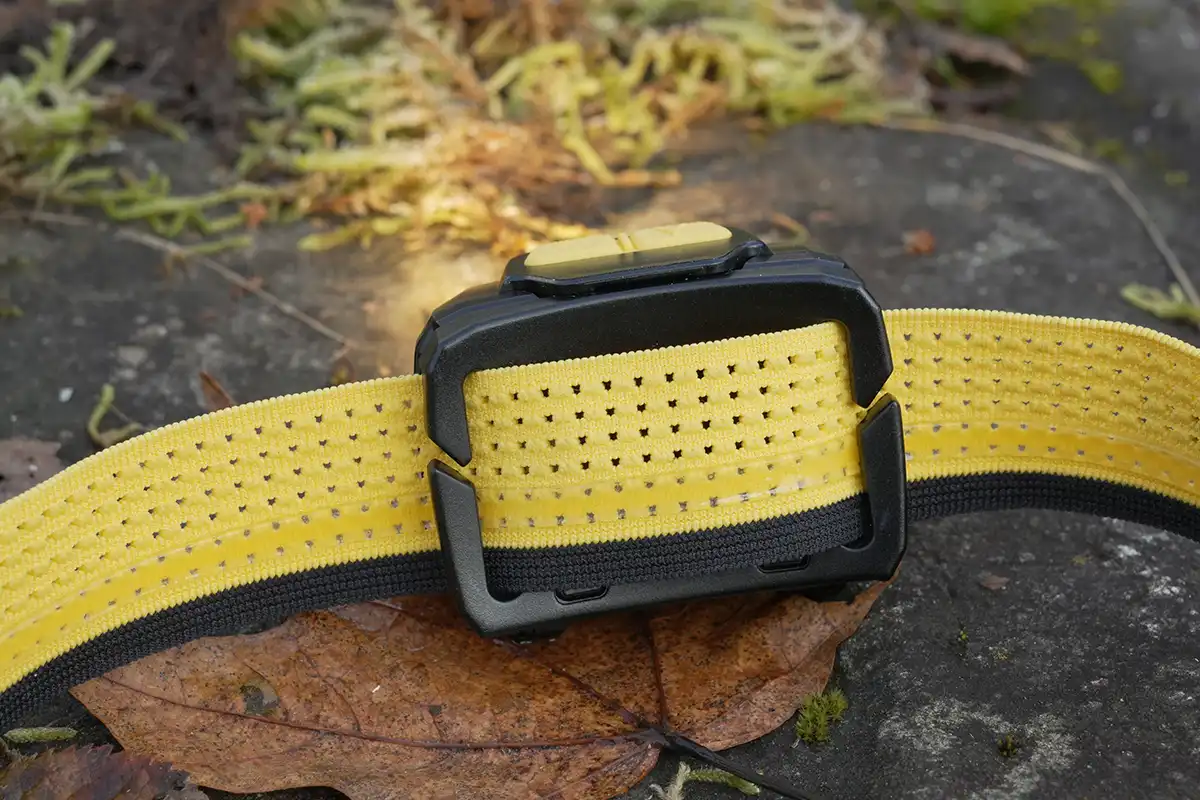
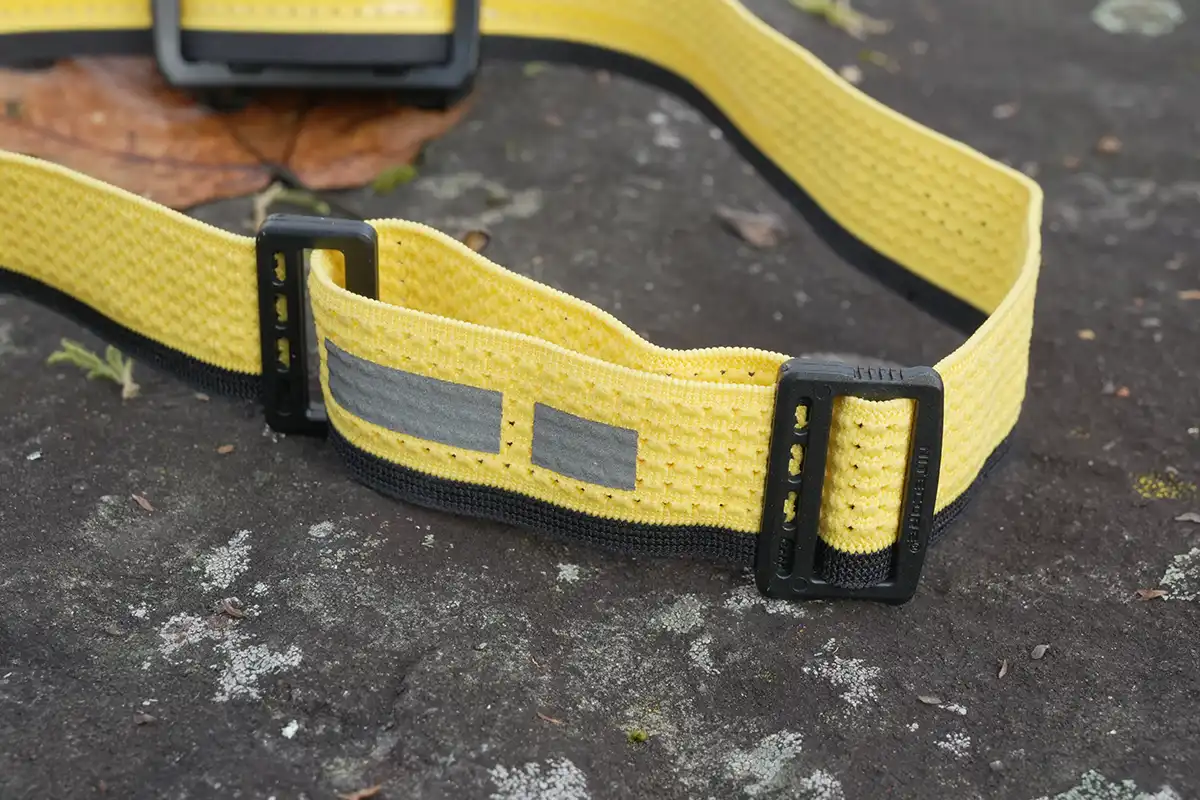
Like I wrote above, the headlamp has two buttons: one marked W and one marked Y. The buttons are rubbery and work well, even with slightly thicker gloves. They have a clear click and are easy to find by touch. The headband is comfortable, breathable and stays in place while running. There is a silicon ridge on the inside that is grippy when wearing the headlamp on my beanie. On bare skin it prevents sweet dripping down in my eyes. It does not feel uncomfortable.
The warm yellow light is excellent. It feels comfortable on the eyes, gives better – more natural – colour rendering and works very well on trails and around camp. The two white light options are good too, but it is a bit colder to the eyes. If the yellow light would not be there, I would be totally fine with only the white ones. Clicking multiple times on the same button makes the intensity higher. Overall – depending on use – the intensities are well chosen. Intensity one at camp or around the house, 1 and 2 for hiking and 3 when running.
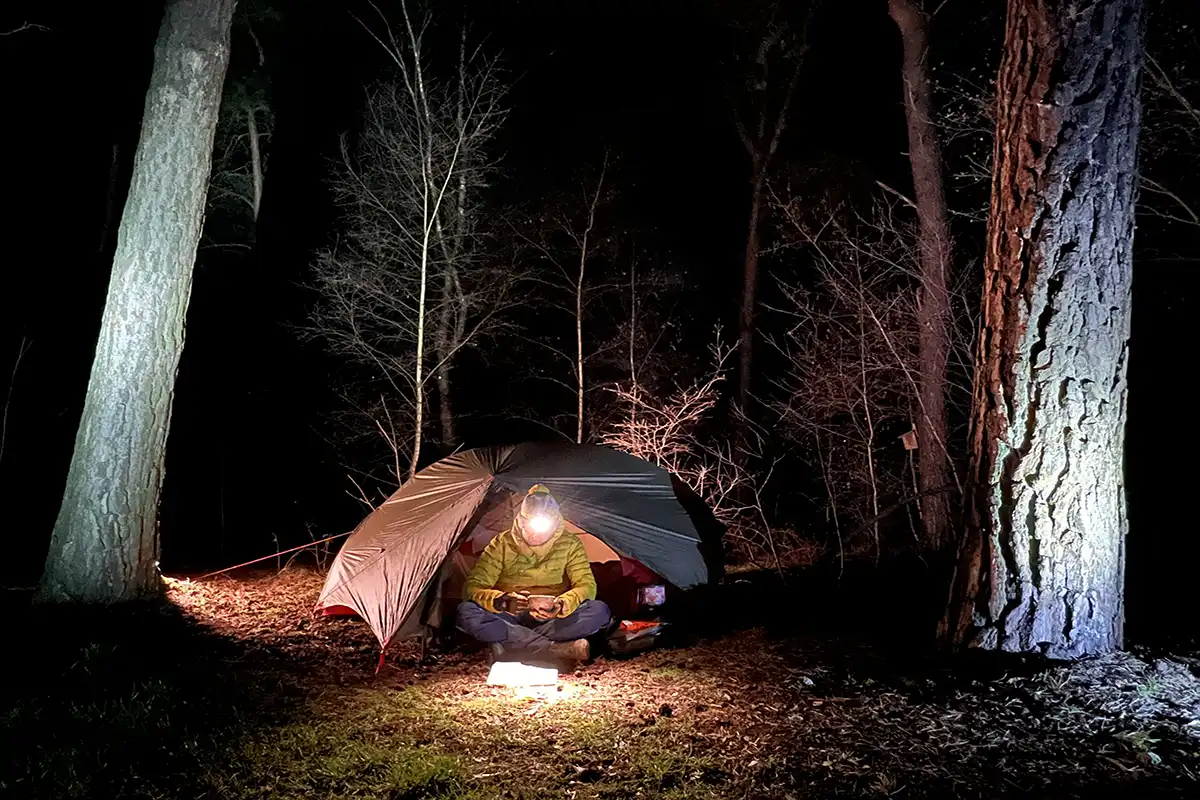
The beam pattern is another highlight: the UT27 only gives a combination of a wide flood light that has a bit higher brightness spot in the center. This gives a wide, even field close to your feet and a clear, focused beam further ahead. On snowy Swedish trails and in Dutch forests the beam was reliable and balanced.
Like with most headlamps the lamp unit can be tilted over a 90 degree angle. This is good because you can point the beam forward or even downwards if you are for example reading a book or cutting a cup out of a piece of wood on a long dark Swedish winter night.
Performance in Winter Conditions
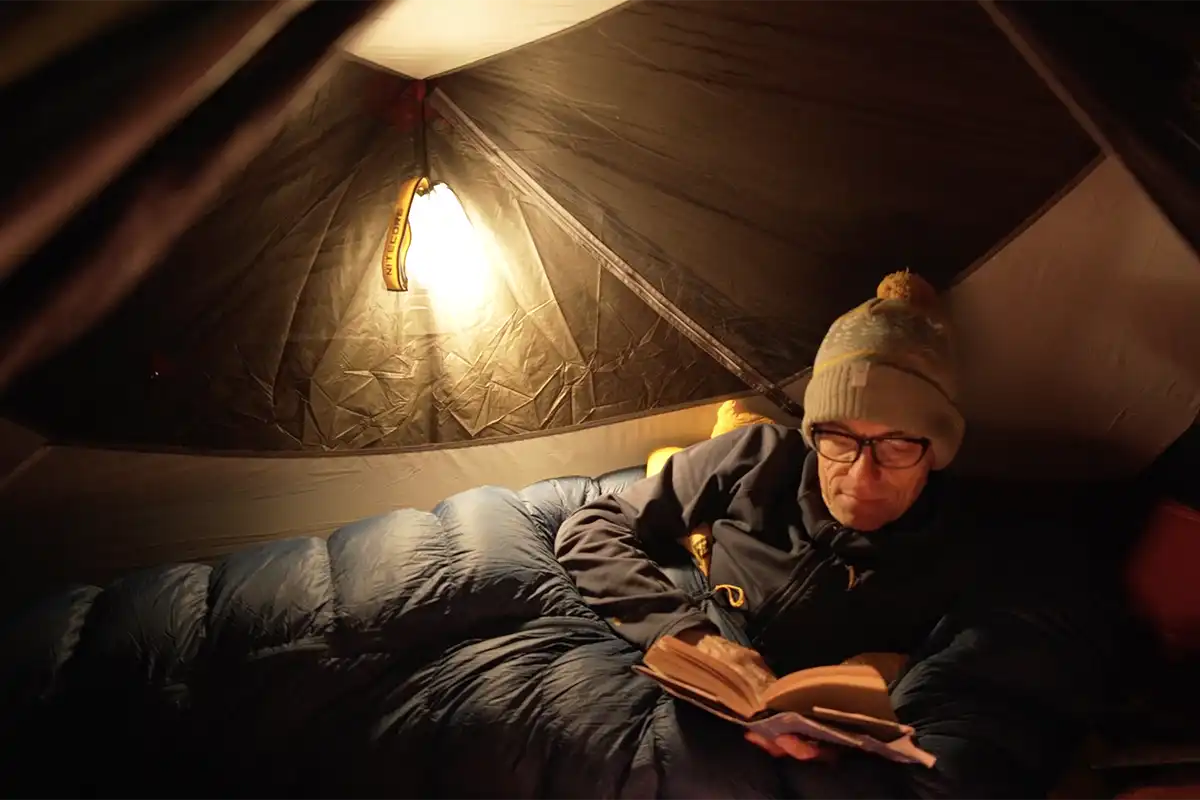
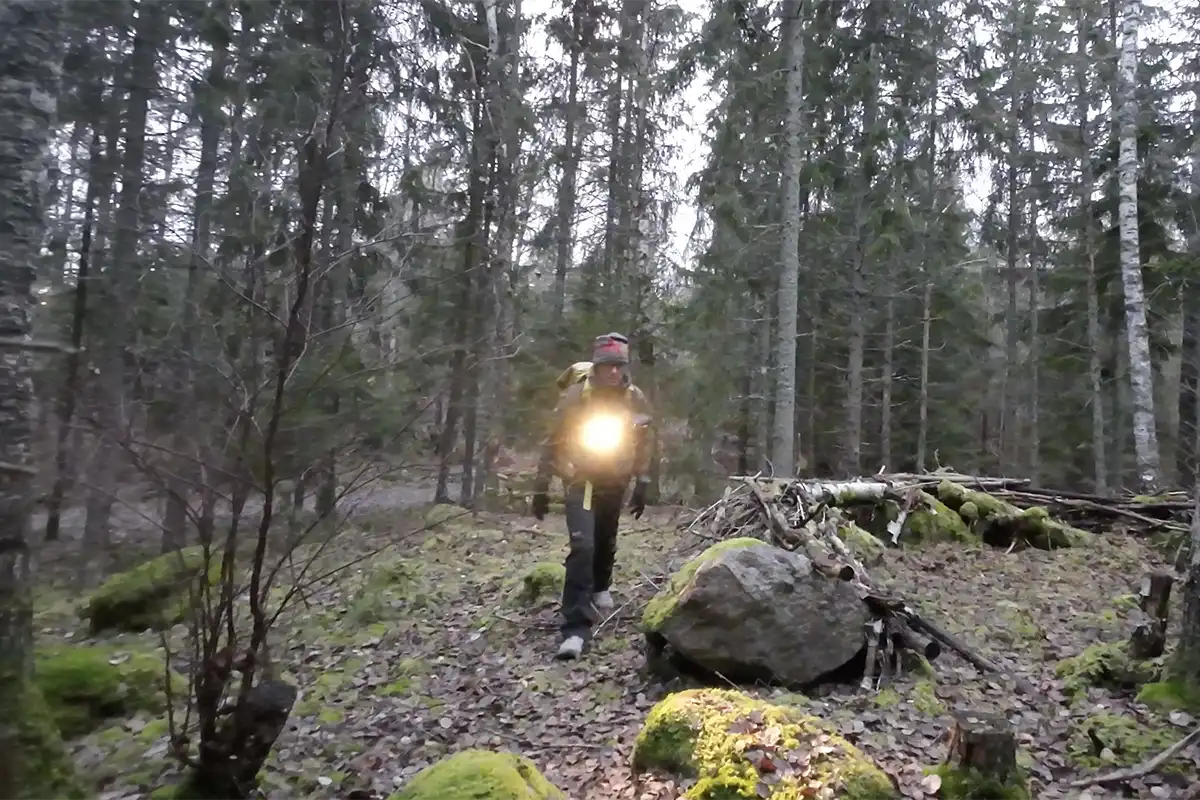
Performance in winter was solid overall. In the Netherlands the UT27 handled rain, wind and wet forest trails without issues. The warm light mode was especially useful in fog or drizzle. In Sweden, temperatures below zero did not noticeably impact performance. The lamp worked well over a beanie or winter hat and the beam remained stable during running. Inside the tent, the softbox turned the headlamp into a gentle lantern that provided warm comfortable light during long dark evenings.
Nitecore UT27 Battery Life
Battery life on the UT27 is solid and appears to match Nitecore’s stated runtimes. At around 20 °C I measured a runtime of 3 hours and 15 minutes to almost 3 hours and 45 minutes until the moment the beam powered down from high (500 Lumen) output. It took another 20 minutes to die completely. After this test I charged the battery to the brim and then I put it outside to freeze to – 5 °C. Outside it ran in high power mode for 3 hours and 36 minutes and I think that is pretty astonishing. Why is this even important? Well if you are camping in below freezing conditions it is good to know that the UT27 will still be usable and does not need to be kept in the warm sleeping bag.

Note: On the bottom of the Nitecore UT27 you’ll find a battery status indicator. The four leds are – regrettably – very hard to see when the lamp is on. When the light is off, it is not always clear how many Led’s light up when you press a button; it looks like there is too little separation between the Led’s. But as an indication it works.
Softbox and clip
The included clip and softbox are genuinely useful. The softbox creates a warm – in Y – diffuse light in the tent, which makes evenings in winter camping conditions much more pleasant. Combining the rechargeable pack with the option to carry AAA batteries makes the UT27 reliable for longer trips where power availability is uncertain. This flexibility ensures that you can keep the lamp running even on multi-day outings or during long winter nights.
Note: When the battery starts getting near its end and the light gets less, it is time to stop. This is better for the longevity of the Li-ion battery.
Does it run hot?
No it does not. I have been running several tests with my infrared thermometer. At room temperature of 20 °C the maximum I measured on the front was 52.1 °C. On the rear I measured 26.6 °C and when I averaged all my measurements, it was about 34 °C and the headlamp always felt comfortable to the skin. The headband prevents a lot of heat from passing through. Outdoors at -5 °C I measured a maximum unit temperature of 5 °C.
IP66 Waterproofness
The UT27 is rated at IP66, which means it is protected against heavy rain, splashing water and dust. In practical outdoor use this makes the headlamp reliable in the kind of conditions you often face outdoors; even during winter: steady rainfall, wet snow or moisture from fog and wind. During my testing, the lamp handled rain showers and wet environments without any issues. While it is not designed for full submersion, the IP66 rating is more than sufficient for hiking, trail running and camp use in demanding weather. This level of waterproofness ensures the lamp keeps functioning even when conditions are far from ideal.
Nitecore UT27 Accessories
Changing to AAA is a good way of extending battery life, but like I wrote before performance is less compared to the Li-ion battery. The good news is that the HLB1500 rechargeable battery pack is available separately. The clip and the softbox that are included with the lamp regrettable will only be replaced during warranty. The clip is especially easy to lose so it would be great if that was an accessory too.
Verdict
After several months of testing the Nitecore UT27 in real winter conditions, I can say that it truly stands out as a versatile and reliable headlamp. What I appreciate most is how well it balances performance, weight, and flexibility. The combination of multiple color temperatures, a well-designed beam pattern, and the option to use both a rechargeable battery and AAA batteries makes it a very capable all-rounder for trail running, hiking, and camping.
In real use, the lamp performs exactly how I want it to. It’s comfortable to wear, stable while running, and it handles cold, wet conditions without any issues. The warm light mode is a highlight for me—it’s much easier on the eyes and works especially well in fog, snow, and around camp. The beam pattern also deserves mention, as it provides a great mix of wide flood and forward visibility. The fluorescent battery compartment is more than just a gimmick when changing batteries in the dark.
That said, it’s not perfect. The biggest downside I experienced is the red light activation. The double-click needs to be extremely fast, and especially with gloves in cold conditions, it can be frustrating to get it right. The battery indicator is also not very clear, which makes it harder to quickly check remaining power.
Overall, I find the Nitecore UT27 to be a dependable and thoughtfully designed headlamp that performs very well where it matters most: outside, in real conditions. The included clip and softbox pouch add extra utility beyond a basic headlamp. The small usability issues don’t outweigh its strengths, but they are worth keeping in mind. The Nitecore UT27 retails for € 66 / $ 70 / £ 65.95 and that is according to what you get. That’s why I rate it at 8.7 out of 10.
🔥 Grab the Nitecore UT27 here:
INT: https://amzn.to/4bqPmfm
NL: https://amzn.to/4bID9UD
UK: https://amzn.to/4sKi9me
Disclosures: All opinions are my own. I don’t have any sponsored videos or sponsor agreements. Some links in the description are affiliate links. By using the affiliate links I earn a small fee of your purchase, it does not cost you anything extra to use them. As an Amazon Associate I earn a small commission from qualifying purchases. They help me to be able to create more free videos for you. Thank you for the support!