The Osprey Downburst 36 is a water-resistant backpack for shorter backpacking trips and hut-to-hut hikes. Read the review and watch the video!
- Size: 36 litre (65.0 cm x 35.0 cm x 32.0 cm or 25.59” X 13.78” X 12.6”)
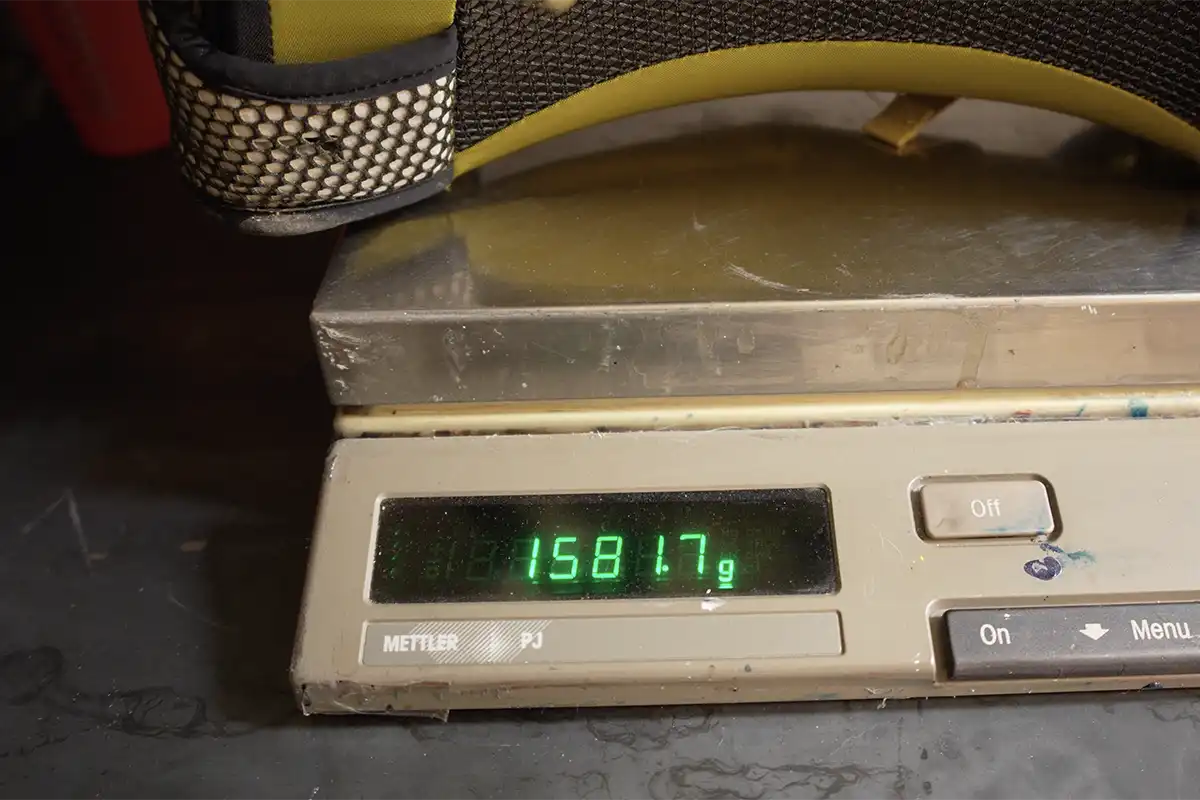
- Weight: 1581.7 gr (claimed 1530 gr)
- Price: € 325 / $ 320 / £ 310
Materials
The Osprey Downburst 36 is a highly weather-protected backpack for shorter backpacking trips and hut-to-hut hikes. Like most Osprey packs the Downburst is designed with a balance between comfort and durability. The pack is made out of a 100% recycled 210D nylon with a TPU laminate and a tougher 420D base.
Size and weight
The pack weight in total as measured on my precision scale is around 1581.7 gr (55.8oz), which matches Osprey’s claim of 1530 gr (53.9oz) quite well. The Osprey measures 36 litres which comes down to about 65.0 cm x 35.0 cm x 32.0 cm or 25.59” x 13.78” x 12.6”.
AirSpeed carrying system
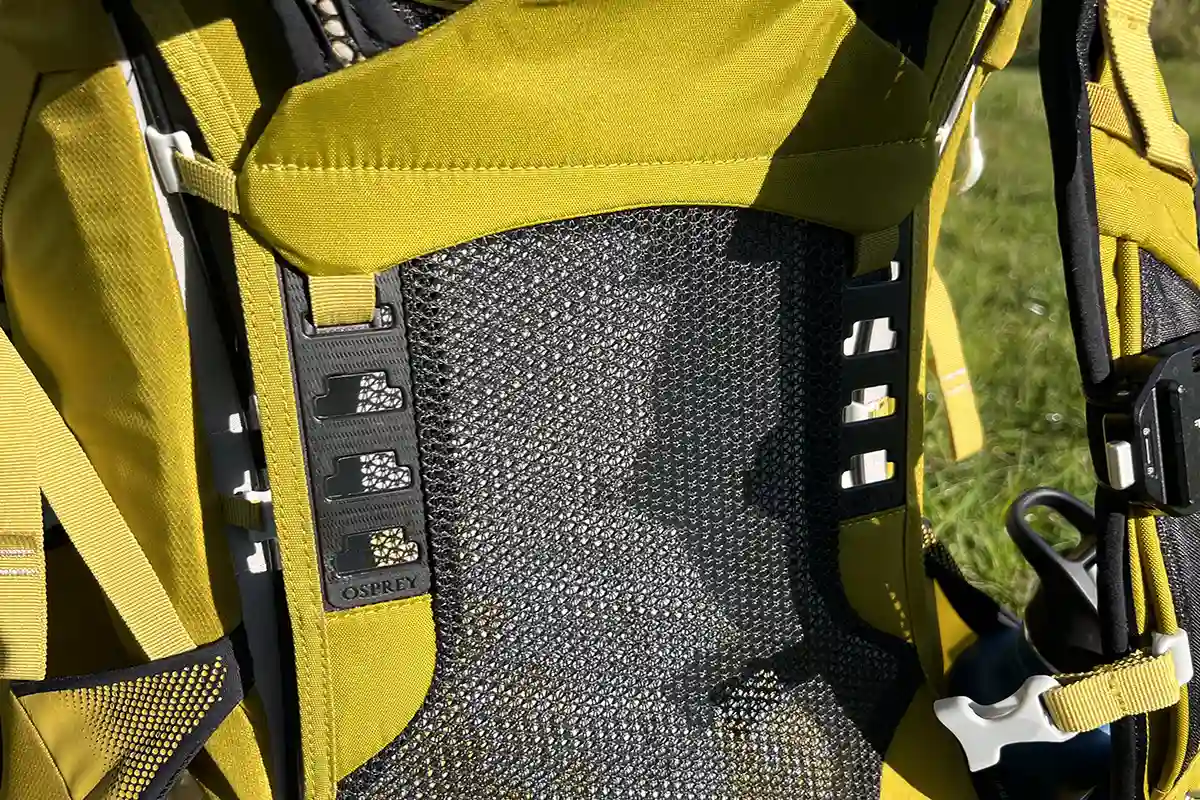
The Osprey AirSpeed carrying system of the Downburst 36 features a mesh webbing that sits directly to your back, but creates space between the mesh and the pack itself. This improves airflow when hiking and should lead to better ventilation and so a less sweaty back when being active. A 4 mm powder coated wire frame provides stability to the pack. Together with the mesh this gives a stable and comfortable feeling since the weight stays close to the body. Especially on longer or more technical hikes this is a big plus. The back mesh panel does not absorb water, so it keeps performing even in heavy rain.

Fitting
The Osprey Downburst 36 is a one size fits all backpack. The length of the torso can be adjusted. The shoulder straps feature a ladder adjustment system that has 5 steps over a distance of 10 cm (4”). Adjusting the torso length is easy. The minimum back length is 44 cm (17.3”) and the maximum 54 cm (21.3”). If you want to know what your back length is and how to measure it: see this video. The hip belt can also be adjusted from a minimum circumference 77 cm (30.3”) to a whopping 130 cm (51.2”).
Shoulder straps and hipbelt
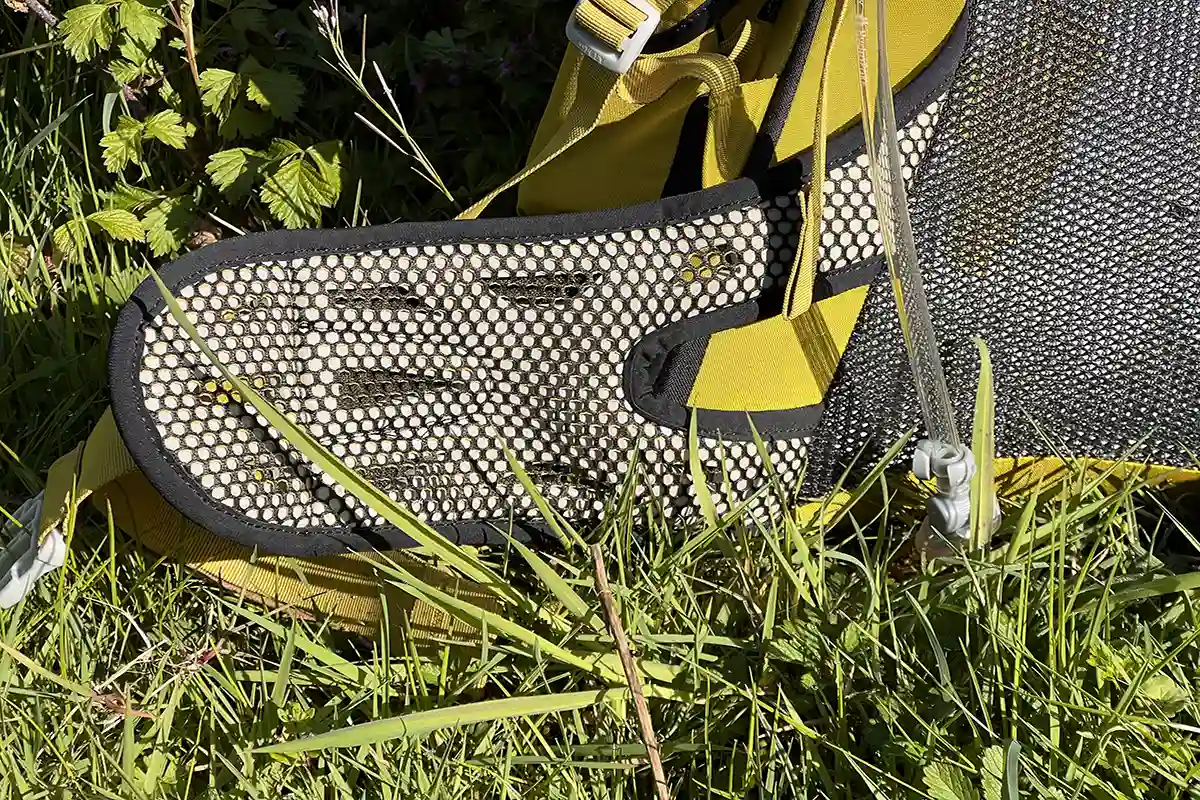
The shoulder straps are ergonomically shaped and fairly wide, spreading the load nicely across the body. The die-cut EVA foam feels supportive without being restrictive. The load lifters – see the same how to video – are effective and easy to adjust. The chest strap includes a safety whistle and stays in place well.

The hipbelt is well-padded and wraps comfortably around the hips. The forward-pull adjustment makes tightening easy on the move. Even when loaded up, the pack remains stable and balanced, something that really stood out during testing. Between the shoulders straps a good handle to grab the Osprey – don’t use the shoulderstraps for this – when you pick it up.


Compartments
The backpack has one main compartment and that one is about 36 liters in volume. Next to that is another second compartment that sits close to the back. A third compartment is a ‘flexible’ open and adjustable one at the backpack backsize. On the hip belt the Osprey has two pockets with zippers. On either side it features a bottle holder.,
Main compartment waterproof construction
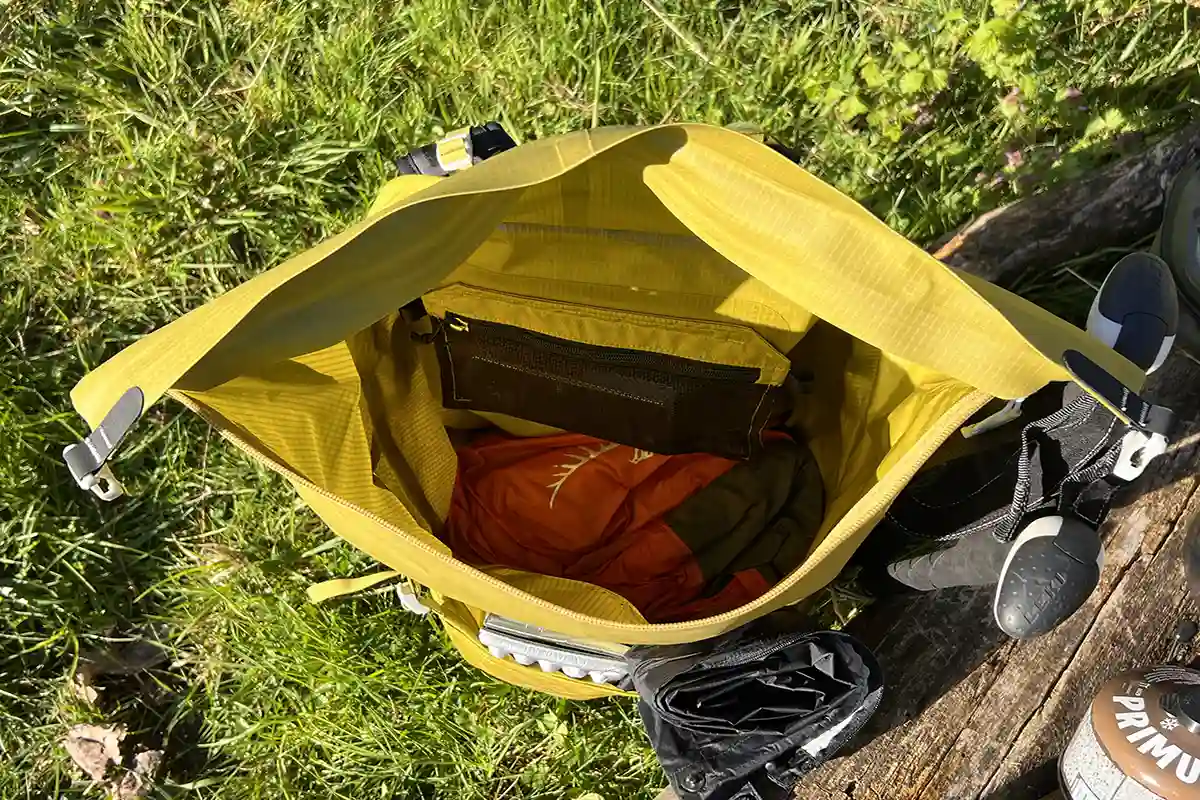
This 36 liter main compartment is a top loader with a roll-top closure and a waterproof zipper. Inside there is a small mesh pocket with a zipper; handy for the dry storage of a passport. The roll-top construction is there for a reason. The big thing about this one main compartment is that it is fully waterproof with an IPX5 rating. And this is different compared to many water-resistant packs.

Most water-resistant packs rely on coatings and rain covers. Osprey does things differently here. The Downburst uses a fully RF-welded construction with TPU-laminated fabrics and sealed seams. This means the main compartment is genuinely waterproof against heavy rain. The construction looks a bit like the Bach Packster 32 that I reviewed ages ago. The Bach has an internal waterproof liner and compared to the Downburst the Osprey is probably a bit less complex and a bit more durable. But also the Downburst has its con’s… later more on that.


Second compartment: not waterproof!
That second compartment sits close to the back and the entrance is one big U-shaped zipper on the top. Although the zipper is of the ‘waterproof’ type, the compartment is not guaranteed waterproof according to Osprey. This compartment also features a pocket for a water bladder and a loop to secure the bladder. The drinking hose has a way to get to the outside of the backpack. This setup works very well in practice. When something goes wrong with inserting the bladder or when rain gets into the compartment, no worries…. a drainage hole in the bottom is provided.


Osprey Downburst in real life
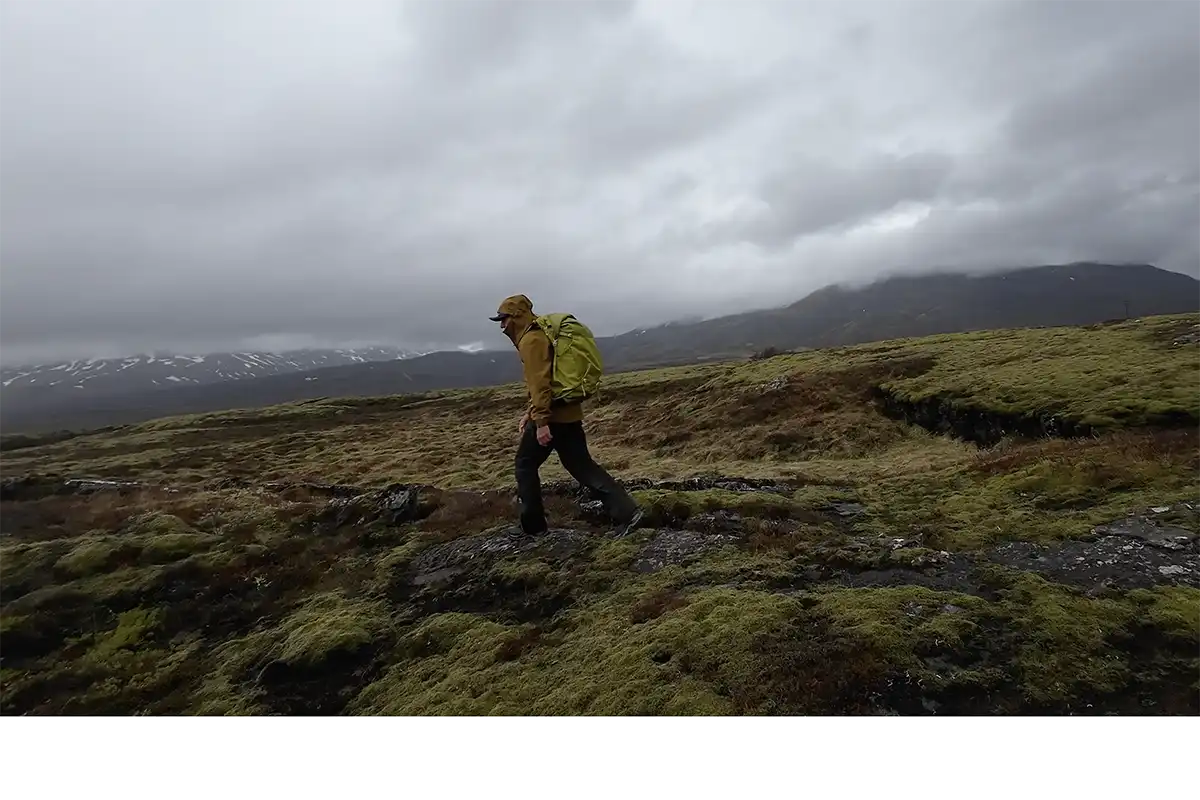
Together with my dearest, I have been testing the Osprey Downburst 36 and 34 in pouring rain in the Netherlands, Sweden and above all in Iceland. We have no complaints about the weatherproofness of the backpack. The main compartment stayed dry at all times. What we also liked is that we never needed a rain cover and that there is no water pooling nor wind getting hold of us because it blows the rain cover like a balloon. The downside is of course that the other compartment and pockets are not fully waterproof, so pack wise!
The Osprey AirSpeed carrying system has proven to be easy to adjust and it fitted us both well. We are not that big – 170 cm (5’7”) – so there was enough room to play. Although the hipbelt and shoulderstraps are pretty firm, the direct contact was comfortable and felt secure. The system is fine for carrying loads up to 15 kg.
Big bummer
Both my dearest and I used the main big compartment to store most of our stuff. This means clothing, a small stove, food, toiletries and sometimes even a sleeping bag. To get stuff in the main compartment you need to open the roll-top and unzip the zipper. This is the easy part.
The material the Osprey is made of, is not smooth on the inside in any way. Putting gear in is a struggle every time. taking gear out; the same. When temperatures are – let’s say – 15° Celsius, the material is sort of flexible. Colder – around 5° Celsius or lower – the materials become almost non-flexible making packing or unpacking not a fun thing to do. This is basically the biggest bummer we have with the Downburst.
But… the Downburst 36 features that secondary compartment with a water-resistant zipper alongside the main waterproof section. Half of the inside is made of that same “I have a struggle with material” while the other half is made of more friendly material. In practice this means I put stuff in waterproof bags in this compartiment….Keep in mind that both compartments share space. If you pack one, it reduces the capacity of the other.
Removable lid
Because of the roll-top system, the backpack does not have a traditional floating lid with all its traditional internal organization options like a mesh pocket and the key ring attachment clip. Is this a bad thing? No, it’s the choice you make when getting the Downburst. The Downbursts design is minimalistic but functional. You don’t get the versatility of a large removable hood, but the trade-off is better weather protection and a cleaner overall design.
Stretch pocket
I mentioned the third ‘flexible’ open compartment on the back of the Osprey Downburst 36 already briefly. Normally one uses this open compartment for storing stuff that we need access too fast when we are hiking. And normally this compartment is flexible and made with mesh; good for airing out a wet towel or damp socks. Not so on the Downburst.
This ‘flexible’ storage compartment is not flexible at all. It is as unforgiving in colder weather as the rest of the backpack. It is almost impossible to get a rain jacket – just an example – in or out of this pocket when the main compartment is fully booked. Although it has a water drainage hole in the bottom, I do miss the airy mesh for drying my wet gear. On the positive side… you’ll find reflective details to enhance visibility when you are walking back to the train station in the middle of the night during a downpour.

Bottle pockets
On the sides of the pack are dual-access bottle pockets that can be accessed in two ways. Put bigger water bottles in from the top and they are secure but almost unreachable while you are hiking. But they also feature a pistol-like opening and then bottles are super accessible. Best of both worlds here! Looking for a stainless steel bottle? See the review I made on the Klean Kanteen Classic. Fancy a thermos… see my Laken thermos review.


Extra features
The Osprey Downburst 36 comes with a few small but very practical features that improve usability on the trail. One of these is the ice axe/trekking pole loop with bungee tie-off. You place the tip in the lower loop and secure the shaft with the bungee. In practice the system is not that stable and it doesn’t work on rough terrain with shorter trekking poles like the Leki Makalu FX Carbon that I reviewed a while ago. Result… I lost one pole in Sweden’s Rogan National Park. I know exactly where because I have it on camera. The point is…. I discovered it way later when the backpacks already drove a couple of hundreds kilometers South.


Another useful addition is Osprey’s Stow-on-the-Go trekking pole system. This allows you to quickly stash or deploy your poles without removing the pack, which is especially handy on changing terrain where you switch between hiking and scrambling. This one is ideal for those more compact trekking poles.
The sternum strap with integrated whistle is a small but important detail. It improves fit and stability while hiking, and the built-in whistle adds an extra layer of safety for emergencies.

Sustainability and durability
When I think about sustainability I always think about durability and longevity. Well…. the Osprey Downburst 36 scores well on all categories.
During two years of use, the Downburst still looks fine. The materials show very little wear, which says a lot about the ruggedness of the construction. A pack that lasts this long reduces the need for replacement, making it a more sustainable choice in the long run.
Thanks to its material choices all is quite good here too. The main fabric is a bluesign approved, 100% recycled 210D nylon with a high-tenacity double ripstop, coated with a TPU laminate. The accent fabric uses a bluesign approved, 100% recycled 70D nylon with a DWR treatment made without PFAS, and the bottom is reinforced with a bluesign approved, 100% recycled 420D nylon, also with a PFAS-free DWR finish.
DWR and PFAS
That our waterproofs are treated with a Durable Water Repellent (DWR), most of us know by now. That this is also the case with other outdoor gear like backpacks, is less known. To keep the outer fabric as dry as possible the DWR-coating comes in. It makes water bead up and roll off the fabric, preventing it from soaking in the fabric.
There are sustainability concerns regarding DWR’s. Traditional DWRs often use PFCs, which are harmful to the environment. While newer alternatives are more eco-friendly, they tend to wear out faster, meaning you may need to reapply treatments more often. PFC’s belong to the big group over PFAS (per- and polyfluoroalkyl substances). They are very effective, but also extremely persistent in the environment, meaning they do not break down easily and can accumulate over time.
Because of their potential impact on ecosystems and human health, many brands are now phasing out PFAS and switching to more environmentally friendly alternatives. That the Downburst is made without is a big pro!

Osprey Downburst 36 in Practice
I’ve been using the Osprey Downburst 36 on shorter backpacking trips and hut-to-hut hikes across the Netherlands, Sweden, and even Iceland, and I have to say, it’s impressively weatherproof. The main compartment stayed completely dry even in heavy rain, which meant I didn’t need to fuss with a rain cover at all. That roll-top and waterproof zipper construction really works. That said, the secondary compartment and pockets aren’t fully waterproof, so I still pack sensitive items in dry bags just to be safe. At 36 liters, the pack feels roomy enough for clothing, food, and a small sleeping bag, yet not too bulky for a day hike or a weekend trip.

What really stands out for me is how comfortable it is to carry. The AirSpeed back system keeps the pack close to my body while still allowing some airflow. The torso length and hip belt adjustments make it easy to get a snug fit, and the padded shoulder straps and hip belt spread the weight evenly. Even fully loaded, the pack feels stable and balanced.
Extra features
In practice, the extra features make a big difference on the trail. I use the dual-access bottle pockets constantly, and the Stow-on-the-Go trekking pole system is sweet when switching between walking and scrambling. The ice axe loop and reflective details give extra peace of mind, and the integrated whistle on the sternum strap is a neat little safety touch. After two years of regular use, the pack still looks top notch, the recycled nylon and PFAS-free DWR treatment hold up really well. All in all, the Downburst 36 is tough, practical, and reliable, and I’ve grown to trust it completely for wet, technical, or unpredictable hiking days.


Of course, it’s not without its quirks. That flexible back pocket isn’t really flexible in cold weather, so getting a wet jacket in or out can be a struggle. I’ve also wrestled with the main compartment and the only thing I really didn’t like is packing and unpacking it. The material on the inside is very grippy making it hard to get gear in or out smoothly. Also when the temperature drops – below 5°C – it’s like the material decides to turn into cardboard, which makes organising gear frustrating at times. And while the trekking pole loops are handy, I’ve lost a pole once – the Leki Makalu FX Carbon, review here – when the terrain got tricky and the bungee didn’t hold as firmly as I’d hoped.

One last remark… the backpack does not stay upright when I put it down. This is caused by the butterfly shaped frame; the Downburst basically balances on two small spots and that just doesn’t work.


My Verdict
The Osprey Downburst 36 is a well‑thought‑out water‑resistant backpack that balances weather protection, comfort, and durability. The IPX5‑rated main compartment kept all our gear dry during heavy rain – even in Iceland’s relentless downpours – without the need for a rain cover. The AirSpeed carrying system is stable, breathable, and comfortable even on longer or more technical hikes. Sustainability is another strong point thanks to the recycled materials and PFAS‑free DWR.
That said, the pack is not perfect. Packing and unpacking the main compartment can be frustrating because the interior material is grippy and stiff in cold weather. The “flexible” back pocket is almost unusable when it’s cold, and the trekking pole loops aren’t 100% reliable on rough terrain. I also noticed that the backpack doesn’t stand upright on its own, which can be annoying when setting it down. Overall, I’d recommend it if waterproofing and durability are your top priorities, and you’re willing to accept a few minor inconveniences for a reliable, all-weather backpack. Considering all this and the price of around €325 / $320 / £310, I feel it’s expensive for the quirks it has, and therefore I rate the Osprey Downburst 36 at 7.5/10.
Information
www.osprey.com